 1-800-609-2917

 1-800-609-2917
What Is the Best Crawl Space Access Door for Commercial Projects?
Posted by Access Doors and Panels on 30th Apr 2026
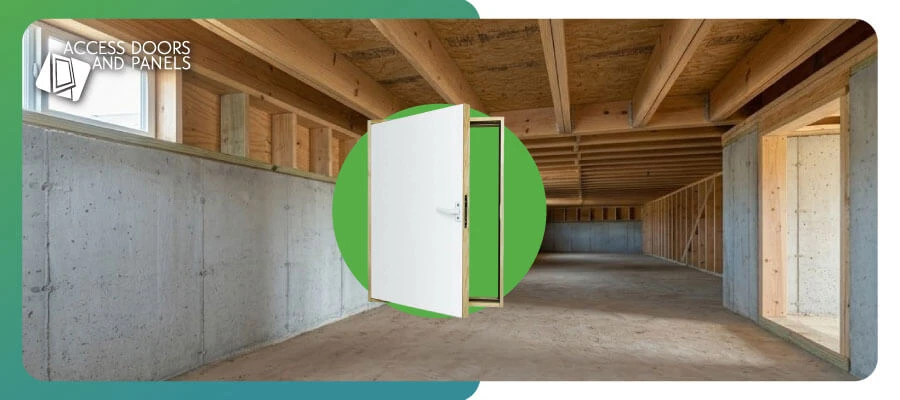
The best crawl space access doors for commercial projects are those that protect your building’s thermal envelope, control moisture, and give maintenance teams safe and reliable access.
In most commercial projects, this means selecting an insulated, airtight access door like BA-DWK for interior crawl spaces and a weather-resistant, airtight/watertight door like BA-ATWT wherever the opening is exposed to the weather or critical environments.
In this article, we’ll look at why insulation and air sealing matter in crawl spaces, what factors determine the best crawl space access doors, and how BA-DWK and BA-ATWT compare for different commercial conditions so you can specify the right solution for your next project.
Why Do Insulation and Air Sealing Matter in Crawl Space Applications?
Insulation and air sealing matter in crawl space applications because they directly affect energy loss, moisture risk, and the long-term durability of the building foundation.
In most commercial buildings, crawl spaces sit in direct contact with the soil and are subject to temperature swings, ground moisture, and hidden mechanical and plumbing runs.
When crawl space access doors are poorly insulated or leaky, they break thermal envelope continuity and become a weak point for:
- Energy loss: Conditioned air escapes, and cold or hot outside air leaks in, forcing HVAC systems to work harder.
- Air leakage control failures: Even small gaps around access doors can compromise carefully detailed air barriers along foundation walls.
- Moisture intrusion prevention: Unsealed openings allow humid outdoor air and bulk water to reach cold surfaces, increasing condensation and mold risk.
Explore our exterior access door options to learn how to choose the right crawl space access doors for your commercial projects.
What Factors Determine the Best Crawl Space Access Door for Commercial Buildings?
The best crawl space access doors for commercial buildings depend on how the space is conditioned, where the access opening is located in the building envelope, and what it will be exposed to over time.
When evaluating your options, look at these core factors:
Location in the Building Envelope
Start by confirming whether the opening is interior or exterior. This will determine whether you prioritize insulation alone or both insulation and weather resistance.
In most commercial projects, the access location will fall into one of two categories:
- Interior, non-weather-exposed walls: For knee walls, interior partitions, and inside-the-envelope crawl spaces, your priority is thermal envelope continuity and airtightness rather than bulk water resistance.
- Exterior or weather-exposed access: For perimeter walls, below-grade areaways, or locations subject to wind-driven rain and standing water, you need a weather-resistant crawl space door with tested air and water performance.
Crawl Space Conditioning Strategy
How the crawl space is treated in the mechanical and energy design also shapes your choice. In practice, you’ll typically be working with one of two approaches:
- Conditioned or semi-conditioned crawl spaces: When the crawl space is part of the conditioned volume, insulation typically moves to the walls, and the space must be built airtight with the air barrier maintained. In these cases, the access door should be an insulated crawl space access door that aligns with the wall assembly.
- Vented/unconditioned crawl spaces: In this design, the insulation is located in the floor joists above the crawl space rather than on the crawl space walls. Because the crawl space is outside the "conditioned" part of the home, the door’s primary job shifts from heat retention to environmental protection.
Insulation and Thermal Performance
The door shouldn’t become a weak link in an otherwise continuous thermal envelope. As a result, look for insulated doors that have a solid core and continuous perimeter seals wherever the crawl space is inside the building’s thermal envelope.
Air and Water Performance
For weather-exposed access, doors tested to standards such as ASTM E283 (air leakage) and ASTM E331 (water penetration) provide performance data that reviewers and commissioning agents can rely on.
Low air leakage rates and passed water penetration tests are strong indicators that the door will support air leakage control and moisture intrusion prevention over the life of the building.
Lifecycle Building Durability and Maintenance
In commercial settings, crawl space access doors must withstand frequent use, physical impacts, and corrosive or high-humidity conditions. As a result, prioritize doors with robust frames and heavy-duty hinges to ensure long-term reliability.
Furthermore, specify access doors that have straightforward hardware so maintenance teams can operate and adjust them without specialized tools.
Related: Install Your Crawl Space Access in 6 Easy Steps: A Professional Guide
How Do BA-DWK and BA-ATWT Compare for Different Commercial Conditions?
BA-DWK Insulated Crawl Space Access Door and BA-ATWT Airtight & Watertight Flush Access Door are designed for different but complementary conditions.
BA-DWK is an insulated interior crawl space and knee-wall solution, while BA-ATWT is an airtight, watertight choice for weather-exposed or high-containment areas.
Let’s look at when to specify each access panel.
BA-DWK Insulated Crawl Space Access Door
You should specify the BA-DWK access door when the crawl space or non-habitable area is within the building’s thermal envelope, and the access opening isn’t directly exposed to rain or standing water.
For example, small commercial buildings where crawl spaces are sealed and insulated as part of the foundation strategy, or knee-wall access to storage or utility spaces behind walls.
BA-DWK's key construction and performance details include:
- Insulated door leaf: The door is insulated to a thickness of 1⅜", with 1⅛" thermal insulation inside and white HDF board on both faces.
- Pinewood frame with integrated seal: A 3⅜" deep pine frame and perimeter seal help limit air leakage and support air barrier continuity.
- Energy-efficient design: The door features super-thermo insulation and an airtight seal to prevent drafts and reduce heat transfer across the opening. This helps you align with energy performance goals.
- Interior-ready finish: The eggshell white door surface and natural wood-grain finishing slats allow the assembly to blend into finished interiors while still providing clear access.
- Flexible operation in tight spaces: BA-DWK can be installed with either left- or right-opening, which is useful in cramped corridors or congested mechanical zones.
BA-ATWT Airtight & Watertight Flush Access Door
For the BA-ATWT access panel, you should specify it when the door penetrates an exterior wall, foundation, or a high-performance interior environment where both air infiltration and water penetration must be tightly controlled.
Examples include clean rooms, hospitals, laboratories, pharmaceutical facilities, and other critical spaces where air and moisture control are part of the process environment.
BA-ATWT's key construction and performance features include:
- Heavy-duty 16-gauge steel door and frame to provide robust impact resistance and long-term durability in demanding commercial settings.
- A 1.5" trim profile and continuously welded connections to create a rigid, flush frame that supports the surrounding wall or ceiling assembly.
- EPDM co-extruded trim seal with a clamping range of 0.040"–0.118" to create a tight, compliant air and water seal.
- A continuous hinge to maintain alignment across the full door height and stainless pan-head screws with self-retaining washers to provide secure attachment.
- Corrosion-resistant finish that uses a rust-inhibitive electrostatic powder coat with a baked white enamel as standard, with stainless steel versions offered in a No. 4 finish for more aggressive environments.
- Independently tested to ASTM E283/E283M for air leakage and ASTM E331 for water penetration, with air infiltration test results of less than 0.1 L/s/m² (0.01 cfm/ft²) when installed according to the manufacturer’s instructions.
Ready to match each model to your project conditions? Request a quote for BA-DWK or BA-ATWT to get recommendations based on your crawl space insulation and exposure needs.
Frequently Asked Questions on Commercial Crawl Space Access Doors
1. When should crawl space access doors be specified to avoid inspection delays?
You should specify crawl space access doors early in design development, so they’re coordinated with foundation insulation, air barriers, and drainage details before permit submittal.
2. When is a weather-resistant crawl space access door required?
You need a weather-resistant crawl space door whenever the opening is in an exterior wall or foundation that is exposed to rain, surface water, snow, or wind-driven water.
In these cases, a panel like BA-ATWT, tested to ASTM E283 for air leakage and ASTM E331 for water penetration, provides the documented performance you need for envelope continuity and inspection confidence.
3. Do crawl space access doors need to be insulated in commercial buildings?
Where the crawl space is inside the building’s thermal envelope, the access door should be insulated and sealed to perform like the rest of the wall.
Uninsulated sheet metal or plywood doors in these locations can undermine your energy model and create cold surfaces where condensation and mold can develop.
To Sum It Up
The best crawl space access doors for commercial projects are those that match your crawl space’s insulation strategy and exposure conditions while preserving air and moisture control.
When you treat crawl space doors as part of the building envelope, you’ll be able to protect energy performance, reduce moisture risk, and improve inspection readiness.
Contact our team or call +1-888-327-5471 to coordinate crawl space access solutions that meet your performance and inspection requirements.