 1-800-609-2917

 1-800-609-2917
Top 5 Reasons Why Fire-Rated Access Panels Fail Inspections on Commercial Jobs
Posted by Access Doors and Panels on 23rd Jul 2026
Fire-rated access panels most often fail inspection due to the wrong fire rating for the assembly, a missing or damaged label, the wrong surface application, an operational problem, or an unauthorized field modification.
Most of these failures are caused well before the panel is installed (during specification, ordering, or rough-in). By the time the inspector flags the issue, the drywall is hung, the paint is applied, or the tiles have been installed. This results in costly rework and sometimes a full panel replacement.
In this article, we'll look at the role fire-rated access panels play in a rated assembly, break down the top five reasons they fail inspections, and walk through how to avoid each one. We’ll also cover how the BA-FRI is built for inspection-ready compliance.
What Role Does a Fire-Rated Access Panel Play in a Fire-Rated Wall or Ceiling Assembly?
A fire-rated access panel maintains the tested fire-resistance rating of the wall or ceiling assembly in which it's installed.
The International Building Code (IBC) ties the required rating of an opening protective to the rating of the surrounding wall assembly. As a result, the entire opening (panel, frame, and hardware) must be listed and labeled for that assembly rating.
When a panel's rating doesn't match the assembly, the fire separation the wall is designed to provide no longer holds up, which leads to a failed inspection.
Planning to specify access panels for fire-rated wall or ceiling assemblies? Browse our full line of fire-rated access doors and panels to select products that match the assembly and avoid a failed inspection.
Related: Which Fire-Rated Access Panels Are the Best for High-Risk Commercial Installs?
What Are the Top 5 Reasons Fire-Rated Access Panels Fail Inspections?
Fire-rated access panels fail commercial fire inspection for one of five reasons. These include:
- Wrong rating for the assembly.
- Missing, damaged, or illegible fire-rating labels.
- Wrong surface application.
- A panel that doesn’t self-close, self-latch, or swing freely.
- Unauthorized field modifications that void the listing.
Let’s look at each one in detail.
1. Wrong Fire Rating for the Assembly
A fire-rated access panel fails inspection if its tested rating doesn't meet the requirements of the wall or ceiling assembly.
For example, installing a 1-hour-rated panel in a fire-rated wall assembly that calls for a 2-hour rating leaves the opening short of the fire-resistance duration the rest of the wall provides. As a result, the panel fails inspection regardless of how well it's installed, and the opening must be redone with a panel rated for the full 2 hours.
2. Missing, Damaged, or Illegible Fire-Rating Labels
A fire-rated panel can also fail inspection if its rating label is missing, painted over, or no longer legible, regardless of how well the product itself performs.
The label is the inspector's primary evidence that the installed unit matches its tested listing, and it must remain permanent and legible for the life of the assembly. Once a label is compromised, only an authorized testing laboratory can field-relabel it. A contractor can't patch it and move on.
3. Wrong Surface Application
Another reason fire-rated doors fail inspection is when they’re installed on the wrong surface type. For example, a wall-rated access panel installed on a fire-rated ceiling assembly, or a ceiling-rated panel installed on a wall.
Vertical wall assemblies and horizontal ceiling assemblies are tested under different fire-exposure and structural-load conditions. As a result, a rating earned in one doesn't carry over to the other, even when the hour rating looks identical on paper.
4. A Panel That Doesn't Self-Close, Self-Latch, or Swing Freely
A fire-rated panel that doesn't self-close, self-latch, or swing freely can fail inspection, even when the panel itself carries the correct rating.
NFPA 80 requires every fire-rated opening to close and latch on its own from any open position. As a result, self-closing and self-latching issues will automatically lead to inspection failures during annual inspections.
5. Unauthorized Field Modifications That Void the Listing
Cutting, drilling, or swapping hardware on a fire-rated access panel without the manufacturer's or testing laboratory’s approval voids its listing and results in an inspection failure.
NFPA 80 prohibits field changes that aren't authorized by the original testing laboratory. These include resizing an opening or installing hardware that isn't part of the tested assembly. Doing so breaks the tested configuration and it's one of the easiest ways to fail inspections.
How Can Contractors Avoid Fire-Rated Access Panel Inspection Failures?
Contractors can avoid fire-rated access panel inspection failures by verifying the rating against the assembly before ordering, installing strictly in accordance with the listed details, and keeping documentation on file.
Here’s a checklist you can use to ensure your fire-rated panels are in prime position to pass inspections:
- Confirm that the panel's fire rating matches the required duration for the wall or ceiling assembly.
- Confirm the panel is listed for the surface type you're installing it on (wall or ceiling).
- Protect the rating label during framing, drywall, and paint work, and ensure it’s legible before close-up.
- Make sure the panel self-closes, self-latches, and swings freely.
- Route any field change, such as resizing, a hardware swap, or any other modification, through the manufacturer or testing laboratory first.
Spending time on these checks is far less costly than a failed inspection, a delayed certificate of occupancy, or construction rework on a wall or ceiling that's already closed.
Related: How Do You Choose Fire-Rated Access Panels That Pass U.S. Building Codes the First Time?
How Does the BA-FRI Support Inspection Ready Fire-Rated Access?
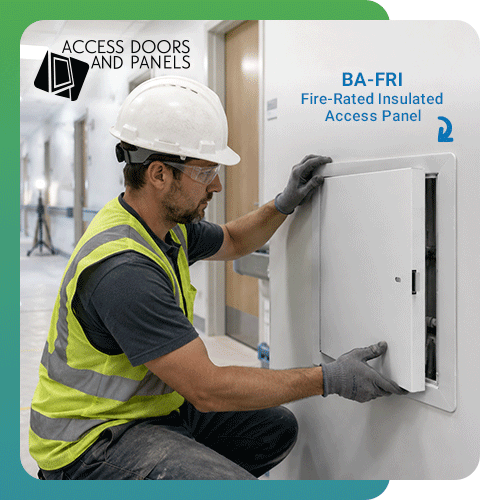
The BA-FRI Fire-Rated Insulated Access Door supports inspection readiness through its tested ratings, listed hardware, and documentation, which are built around the same details inspectors check when doing inspections.
Here are its key features that make it ideal for rated wall and ceiling assemblies:
- A 3-hour fire rating in vertical wall assemblies, certified to UBC 7-2, UL 10B, NFPA 252, and CAN/ULC S104 standards.
- A 3-hour fire rating in non-combustible ceiling construction and a 1-hour rating in combustible ceiling construction, certified to ASTM E119 and CAN/ULC S101 requirements.
- A self-latching slam latch and an automatic panel closer, so the panel closes and secures itself without relying on technicians remembering to lock it.
- A continuous piano hinge and an optional masonry anchor, so the panel stays aligned and swings smoothly across steel stud, wood stud, and masonry walls without sagging or binding over time.
Important note: Fire-rated access doors do not stop fires from starting; they help slow down the spread of a fire for a limited period.
Ready to specify the BA-FRI for your fire-rated assemblies? Request a quote to confirm pricing and details on the correct size and configuration before your rough-in date. Need something outside our standard sizes? Custom sizing is also available to fit your exact opening.
Frequently Asked Questions on Fire-Rated Access Doors
1. Do Fire-Rated Access Panels Need to Be Inspected Every Year?
Yes. Fire-rated access panels installed in a fire-rated wall or ceiling assembly are subject to the same annual inspection requirement that applies to fire doors under NFPA 80.
The standard requires a written record of each inspection, confirming the label, hardware, and field condition still match the original listing.
2. Can a Fire-Rated Access Panel Be Field-Cut to a Custom Size?
No. Cutting a fire-rated access panel down to a custom size in the field voids its listing. Any change to the opening size, hardware, or frame outside the manufacturer's tested configuration breaks the chain of certification that an inspector relies on.
If you need a non-standard size, order a custom-manufactured panel instead of modifying a stock unit on-site.
3. What Happens if a Fire-Rated Access Panel Is Missing Its Label?
A fire-rated access panel with a missing label is treated as an unrated panel until an authorized testing laboratory re-labels it in the field.
The label carries construction information that can't be verified by a visual inspection alone, so only the original certifying agency, such as UL, can issue a new one.
To Sum It Up
A failed fire-rated access panel inspection most often comes down to a detail that got missed before the wall closed up.
By the time an inspector catches it, it’s already too late for simple fixes and tearing back into work that's already done is the only solution.
If you're specifying a fire-rated access panel for an upcoming project and want to confirm it's the right match for your wall or ceiling assembly, contact us or call 1-888-327-5471. Our team will help you select the right product and avoid inspection issues.