 1-800-609-2917

 1-800-609-2917
Why Tile-Friendly & Flush Drywall Panels Are Essential for Modern Commercial Interiors
Posted by Access Doors and Panels on 9th Apr 2026
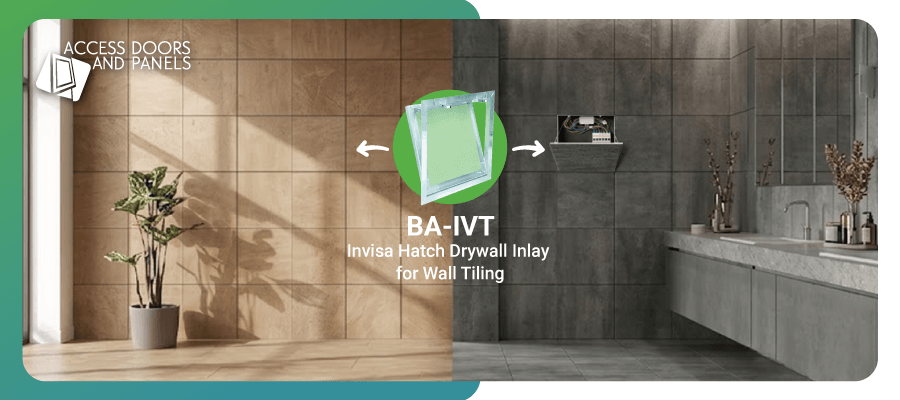
Tile-friendly, flush drywall access panels are essential in modern commercial interior access because they preserve clean finishes while still providing reliable service access where needed.
In high-visibility spaces, even a small access point can disrupt the entire finish if it's planned too late. Standard panels often create:
- Uneven surfaces
- Misaligned grout lines
- Cracked tile edges
- Patching around the frame
These problems quickly turn into punch-list delays and costly rework. This is where specialized tile-friendly and flush drywall panels become essential. When specified early and coordinated with finishing trades, these panels prevent common failures.
Why Do Tile and Drywall Finishes Require Specialized Access Panel Solutions?
Standard access doors often create "finish friction" because their raised metal flanges sit on the wall surface. This results in a physical and visual bump.
In high-visibility environments like hospitality lobbies or healthcare suites, for instance, this ruins the clean look that most owners prefer.
Concealed commercial access doors and flush drywall solutions solve this by providing a recessed frame that accepts the finishing material directly. The result is a door face that's on the same plane as the surrounding substrate.
Commercial interiors favor minimalistic looks, which concealed service access points provide. More importantly, the technical tolerances for tiles and drywalls are tight. If a panel isn't perfectly flush, you face several field failures:
- Cracked Grout: A standard access door has metal flanges that expand and contract at a different rate than the tile. Every time a maintenance worker opens a standard door, it can slightly jar the surrounding tiles, causing grout to crack.
- Uneven Tile Planes: Standard doors force installers to "build up" mortar around the frame, leading to lippage.
- Patching Nightmares: For drywall, non-flush doors require extensive feathering and sanding, which often leaves a visible hump after the final coat of paint.
Recessed inlay frames prevent these issues by allowing the trades to treat the service access point as part of the wall, rather than an obstacle to work around.
Eliminate visual clutter and protect your disrupted sightlines. Switch to our architecturally discreet access solutions for seamless integration that standard surface-mounted frames simply can't provide.
How Do Tile-Friendly Access Panels Protect Grout Lines and Surface Alignment?
A tile-friendly access panel protects grout lines by acting as a stable, recessed tray that allows the tile pattern to continue uninterrupted across the door face.
By providing a rigid substrate for the tile and mortar, these panels ensure that grout line alignment remains consistent with the rest of the wall. Because the panel is flush with the wall's cement board or substrate, the tile installer can maintain a consistent mortar bed thickness. The consistency prevents the lippage or unevenness typically caused by surface-mounted frames.
Additionally, when an installer uses a tile-friendly access panel, they don't disrupt the tile layout coordination. They can run their tile right over the door, making the necessary cuts so the gaps align perfectly with the door's opening.
This continuity is vital for:
- Vibration Resistance: Commercial buildings hum with MEP activity. A stable frame prevents that vibration from rattling the tile and loosening the bond.
- Clean Cuts: Without a bulky trim ring in the way, the tile can be cut cleanly to the edge of the door, minimizing the visual gap.
- Stress Distribution: These panels are engineered to support the weight of heavy porcelain or stone, preventing the door from sagging over time and putting pressure on the surrounding grout.
Related: Your Complete Guide to Drywall Inlay Access Panels
What Makes Flush Drywall Panels More Efficient in Modern Commercial Builds?
Flush drywall panels increase efficiency by eliminating the need for excessive "feathering" and sanding during the finishing stage. Unlike traditional doors that sit on top of the drywall, flush inlay panels feature a frame that is mudded directly into the wall.
This allows the installer to treat the door frame as a corner bead, creating a perfectly flat surface ready for paint with minimal effort. This process significantly reduces RFI counts and punch-list touch-ups related to uneven wall planes.
From a contractor's perspective, drywall-inlay construction is a major time-saver.
Consider the usual workflow: with a standard door, the painter often complains that the "hump" from the door frame is visible under light. This leads to a callback for the drywaller to sand and re-skim.
Related: Enhance Aesthetic Appeal With Our Flush Access Doors
When Should Tile-Friendly and Flush Panels Be Specified to Avoid Costly Rework?
The most effective time to specify tile-friendly, flush panels is during the design and pre-construction phases. Early coordination allows the architect to align the access panel dimensions with the tile grid or drywall layout, ensuring the door doesn't cut through the middle of a large-format tile.
When MEP rough-ins are coordinated with finish-ready panels, you avoid the "emergency" field modifications that lead to cracked grout and failed inspections.
To prevent rework, trade collaboration is necessary.
- Architect/Specifier: To select the model that matches the finish thickness.
- GC/PM: To ensure the installation sequencing allows the drywall and tile trades to prep the openings properly.
- MEP Technicians: To ensure valves or dampers are reachable through the designated "hidden" opening.
Waiting until the punch list to address a bulky or misplaced access door is much more expensive than getting the spec right on day one.
Related: How to Choose the Right Access Door Flange for Your Commercial Project
How Do BA-IVT, BA-IVH, and BA-IVHDF Perform in Tile and Drywall Applications?
BA-IVT, BA-IVH, and BA-IVHDF Invisa hatch drywall inlay access panels are designed to preserve finish integrity. Here are a few features they have in common that make them ideal for tile and drywall applications:
- Discreet Inlay Design: Features a recessed door leaf that accepts ceramic, porcelain, or stone tile for a completely flush, visually pleasing finish.
- Fully Detachable Door: The panel can be completely removed from the frame, providing maximum clearance for technicians working in restricted or narrow plenums.
- Aluminum Construction: Built from lightweight yet durable high-grade aluminum that resists corrosion in moisture-heavy environments.
- Concealed Operation: Utilizes a hidden push-to-latch mechanism, removing the need for visible handles or protruding locks that break the tile's grid.
The only differences between the three panels are their substrate compatibility and flange. While BA-IVT and BA-IVH access panels are available in configurations that match standard 1/2" or 5/8" gypsum drywall inlay depths, the BA-IVHDF is only available in 5/8".
However, the BA-IVHDF access panel comes with an integrated mud-in flange. It's designed with exposed perforated flanges that allow for precision taping and mudding, ensuring a polished transition between the door and drywall.
Don't let field-modified hacks compromise your project's finish tolerances. Request a quote for the BA-IVH, BA-IVHDF, or BA-IVT access panel today to ensure a clean reveal that aligns with your installation sequencing. Call +1-888-327-5471.
FAQs about Flush and Tile-Friendly Access Panels
1. How do I prevent grout from cracking around a metal access door?
Use a tile-friendly, flush inlay panel designed for tile finishes, and avoid surface-mounted frames that create stress points. Make sure the opening is square, the frame is rigid, and the tile is supported evenly around the perimeter.
2. Can an access panel be hidden in a large-format porcelain tile wall?
Yes, if you use a tile-inlay access panel that allows the tile to sit flush and keeps the face aligned with the surrounding surface. Large-format tile makes precision even more important, so it's important to coordinate layout and panel placement early.
3. How do you mud in a drywall access door without the edges cracking later?
Use a flush drywall inlay panel, finish it like a drywall joint (not a patch), and avoid building up compound too thick at the edges. Cracking usually comes from movement, uneven framing, or over-feathering the perimeter.
4. What's the difference between a flush drywall access panel and a standard access door?
A standard door has a visible metal flange that sits atop the drywall. A flush panel like the BA-IVH access panel has a hidden flange that is mudded into the drywall, leaving only a tiny hairline gap visible.
5. Do flush access panels hold up in high-traffic commercial interiors?
Yes, provided you specify a strong, well-constructed version. These are designed with thicker gauges and reinforced hinges to handle a busy commercial environment.
Conclusion
When access panels are treated as an afterthought, the result is a compromised finish. Planning early and picking the right model helps avoid cracked grout, humped drywall, and a "cheap" aesthetic.
By using tile-friendly, flush-drywall panels like the BA-IVT, BA-IVH, and BA-IVHDF, designers and contractors can protect the integrity of their surfaces.
Early coordination and the right specification lead to fewer punch-list headaches, reduced rework, and a seamless finish that stands up to the rigors of commercial use.
Struggling with lippage and telegraphing joints around your utility points? Contact our team today to coordinate zero-clearance access solutions that prevent cracked soft joints and ensure a professional result.