 1-800-609-2917

 1-800-609-2917
Why Tamper-Resistant Access Panels Matter in Public and High-Security Buildings
Posted by Access Doors and Panels on 13th Apr 2026
Tamper-resistant access panels protect critical building systems in public and high-security facilities. They prevent unauthorized entry, vandalism, and system interference.
In high-traffic areas like schools, correctional facilities, healthcare centers, and transit hubs, standard or unsecured panels can expose mechanical, electrical, and fire-rated assemblies to tampering. This creates safety risks, inspection failures, and liability exposure.
To maintain public building access security, facility managers must move beyond basic hardware.
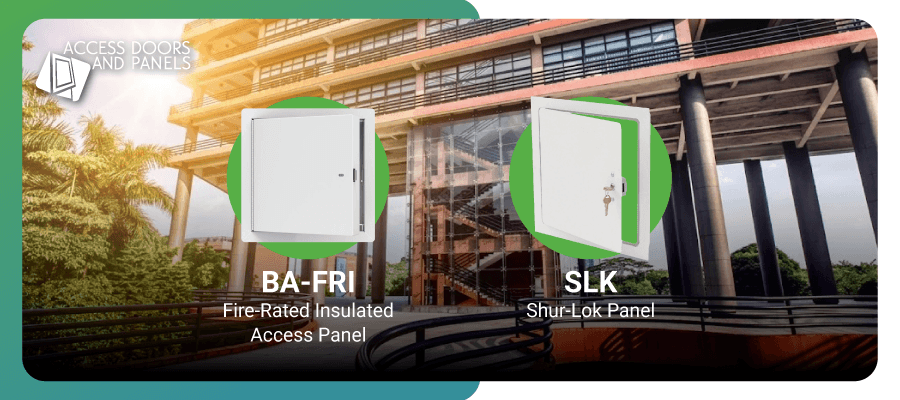
In this article, we’ll explain why standard panels fall short and what defines true tamper resistance. We’ll then discuss how solutions such as the BA-FRI and SLK access panel models support high-security access doors in sensitive environments.
Why Are Standard Access Panels Insufficient for Public and High-Security Buildings?
Standard access panels lack reinforced construction and secure locking mechanisms. They're vulnerable to forced entry and vandalism in high-traffic facilities.
While a basic cam-lock panel works for a private office closet, it offers almost no resistance against a motivated individual with a screwdriver or sheer force. In public infrastructure projects, this vulnerability can lead to mechanical system interference. It could also compromise fire-rated barriers, which impacts occupant safety.
The limitations of standard panels generally fall into three categories:
- Material Strength: Most off-the-shelf panels rely on thin-gauge steel that bends or pries away from the frame under force.
- Locking Vulnerability: Standard flat-key or screwdriver-turn latches are universal. Anyone with a basic toolkit can gain access to high-voltage wires or plumbing shut-off valves.
- Liability and Compliance: An unsecured panel in a psychiatric ward or a school isn't just a maintenance issue; it's a legal risk. If a fire assembly is compromised because a panel door was left hanging or easily removed, the facility may fail critical safety inspections.
Choosing tamper-resistant access panels ensures that your public building's access remains seamless and impenetrable within the wall or ceiling assembly.
Choose access panels engineered for durability, control, and compliance. Secure your infrastructure with access solutions built for high-traffic environments. Browse our full selection of vandal-proof commercial access panels.
What Defines a Tamper-Resistant Access Panel in Commercial Construction?
Tamper-resistant access panels combine reinforced construction and controlled locking systems to prevent unauthorized system access while maintaining a flush, unobtrusive profile.
Unlike standard units, these high-security access doors are engineered to withstand physical strikes and tampering attempts.
To be truly "tamper-resistant" rather than just "lockable," a panel must feature:
- Heavy-Duty Construction: They are defined by heavy-duty materials, often 14-gauge or 12-gauge steel, and hinges that are either continuous or completely concealed to prevent prying.
- Reinforced Frames: Deeply embedded frames that prevent the entire unit from being pulled out of the drywall or masonry.
- Security-Grade Locking: This includes pinned hex heads, star-drive security screws, or institutional-grade cylinder locks that require specific, restricted keys.
- Flush Installation: A design that leaves no gaps for leverage. If a person can't get a tool between the door and the frame, they can't pry it open.
In secure commercial access panels, the focus is on critical system protection. These units are designed to be "out of sight, out of mind" for the general public, while remaining easily accessible to authorized maintenance personnel with the right security clearance and tools.
Related: The Guide to Selecting the Perfect Security Access Door for High-Security Areas
How Do Locking Systems and Fire-Rated Assemblies Affect Security Performance?
Security performance depends on both reinforced locking systems and the maintenance of the integrity of fire-rated assemblies to ensure inspection compliance. A security door is only as strong as its lock, but in many public buildings, it must also serve as a fire barrier.
Fire-rated secure access doors are tested to ensure that, even with high-security hardware, they still prevent the spread of fire for a designated period (usually 1 to 3 hours).
Locking System Variety
The type of lock you choose should match the facility's risk level. Secure locking mechanisms range from:
- Security Hex Screws: Best for low-to-medium security, where you just want to prevent casual tampering.
- Keyed-Alike Cylinder Locks: Allows maintenance teams to use one key for every panel in the building, streamlining workflow while keeping the public out.
- Institutional Deadbolts: Used in correctional or high-security government sectors where the panel must meet the same security standards as the room's entry door.
Fire-Rated Integrity
When you install an access panel in a fire-rated wall, the panel becomes part of that safety system. If the locking mechanism fails or the door doesn't self-close and latch, the fire rating of the entire wall is voided.
Using fire-rated, secure access doors ensures you don't have to choose between keeping people out and maintaining the building's fire suppression strategy.
Related: Which Fire-Rated and Tamper-Proof Panels Meet Megaproject and Code Compliance Standards?
When Should Tamper-Resistant Panels Be Specified to Reduce Risk and Liability?
Specifying tamper-resistant access panels during the early design phase reduces risk. It improves inspection outcomes and protects facility infrastructure from long-term liability.
While it might be tempting to save on the initial budget by using standard panels, the cost of a single security event far outweighs the price of a secure door.
Consider a student accessing fire alarm wiring or control modules behind an unsecured wall panel, potentially turning off part of the notification system. Or a patient gaining access to medical gas valves, creating a life-safety hazard.
Such incidents can expose facility managers and contractors to liability, failed inspections, insurance claims, and reputational damage.
Architects and specifiers should prioritize tamper-resistant access panels in the following areas:
- Mechanical Rooms Especially those that open into public hallways.
- Schools and Universities: To prevent student pranks or accidental damage to MEP systems.
- Healthcare Facility Construction: To ensure patients cannot access wires or pipes that could be used for self-harm or system disruption.
- High-Traffic Public Infrastructure: Airports, bus terminals, and train stations where vandal-proof is the minimum requirement.
By integrating secure commercial access panels into the initial project specs, you ensure public infrastructure durability. Retrofitting these panels later is significantly more expensive and often results in a less clean aesthetic finish.
How Do BA-FRI and SLK Support Secure Access in Sensitive Environments?
The BA-FRI and SLK models provide high-level security by integrating reinforced steel construction with specialized locking systems designed for high-traffic facilities.
SLK Shur-Lok Panel for High-Traffic Security
Constructed by Elmdor, this security panel features:
- Unmatched Security: The combination of 14-gauge construction and a 16-gauge reinforcement channel ensures tamper-proof security. Its concealed, continuous stainless steel piano hinge and an automatic locking spring bolt ensure that critical systems remain protected.
- Customizable Locking Solutions: Facility managers can choose between a keyed automatic spring bolt or a cylinder lock with a dust shutter to meet various security needs.
- Sustainable Durability: Engineered with recycled materials, the SLK offers exceptional longevity. For environments requiring maximum resilience, an optional stainless steel construction is available.
- Versatile Application: It's built for seamless integration into drywall, masonry, or concrete structures.
- Aesthetic Integration: The white prime coat finish is fully paintable, allowing the panel to blend into existing décor. The concealed hinge maintains a sleek, professional profile.
BA-FRI Fire-Rated Insulated Access Door for Compliance
The BA-FRI access panel is ideal for projects requiring access to mechanical rooms, stairwells, and attics without compromising fire-rated assemblies.
- Certified Fire Resistance: Featuring 2-inch-thick mineral wool insulation, the BA-FRI offers a 2-hour fire rating certified to U.L. standards.
- NFPA 80 Compliance: The self-closing and self-latching slam latch mechanism ensures hands-free operation and guaranteed latching, meeting strict NFPA 80 requirements.
- Sustainability and LEED Credits: This model is LEED v4-compliant, using 70% recycled material in its mineral wool insulation to support green building goals.
- Rugged Construction: The anti-corrosive galvanneal steel construction provides a long lifecycle, even in demanding commercial environments.
Ensure your project is AHJ-approved and passes your fire inspection the first time. Whether you need a keyed-alike facility lock or a 2-hour fire-rated access door, our experts can provide a detailed estimate. If timing is tight, take advantage of our same-day and next-day shipping to keep your project moving. Request a quote for your high-security project.
FAQs about Tamper-Resistant Access Panels
1. Are tamper-resistant access panels approved for 2-hour fire-rated masonry walls?
Only access panels that are listed and labeled for fire-rated applications canbe installedin 2-hour fire-rated masonry walls. Check that the tamper-resistant panel is also fire-rated and UL-certified (or equivalent) for 2-hour assemblies.
2. What gauge of steel do I need to prevent prying in a correctional setting?
In correctional facilities, specify heavy-gauge steel—typically 12 to 14 gauge—for both the door and frame. Thinner steel can bend under force. Just as important, the panel should include a reinforced frame and secure anchoring to the surrounding wall.
3. How can I tell if the hinge is concealed enough that a screwdriver can't pop the pin?
Check the hinge when the door is closed. You should not see exposed hinge pins, barrels, or accessible fasteners on the secure side. Look for a continuous hinge with non-removable pins or a fully concealed hinge integrated into the frame, as in the SLK model.
Conclusion
Protecting a building's infrastructure requires more than sturdy walls. It also means securing access to the systems that keep it running. Tamper-resistant access panels create a controlled barrier. They ensure that only authorized technicians can access building systems.
By specifying high-security, compliant access doors, such as the BA-FRI and SLK models, facility managers and architects strengthen public building access security. They also maintain fire code compliance and reduce long-term liability.
Need help choosing the right anti-pry solution for a sensitive facility? We provide restricted access solutions that balance security with ease of maintenance. Call +1-888-327-5471 or contact our product specialists today to discuss your specific facility requirements.