 1-800-609-2917

 1-800-609-2917
What Are the Most Reliable Access Panels for High-Traffic Commercial Interiors?
Posted by Access Doors and Panels on 6th Mar 2026
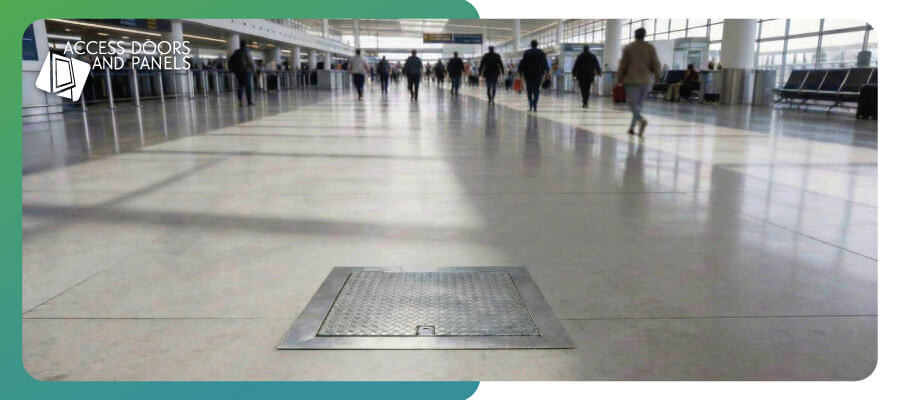
The most reliable access panels for high-traffic commercial interiors are those that maintain structural integrity and alignment and protect surrounding finishes even after being used over a long period.
In corridors, service routes, and shared interior spaces, access points are opened regularly and exposed to equipment movement and routine maintenance. When access panels aren’t designed for these conditions, problems tend to show up early.
Misaligned doors, loose frames, and damaged wall finishes can turn these small openings into ongoing maintenance problems. Over time, those issues drive up repair costs and interrupt facility operations.
Choosing durable access panels, like the BA-DSD Draft Stop Access Panel and BA-UHF Aesthetic Access Panel with Hidden Flange, is one of the most direct ways to reduce these risks.
In this article, we’ll explain how frequent use affects access panel performance, where heavy-duty access panels should be prioritized, and how BA-UHF and BA-DSD perform under repeated use in high-traffic interior environments.
How Does Frequent Use Affect Access Panel Performance and Lifespan?
Frequent use causes repeated strain on hinges, latches, frames, and surrounding finishes, which shortens the service life of access panels and increases maintenance frequency.
In high-use commercial interiors, access panels are opened regularly for inspections, balancing, adjustments, and repairs. At the same time, they’re exposed to incidental contact from carts, cleaning equipment, and foot traffic.
Panels not designed for these conditions often develop predictable issues, including doors that fall out of alignment, latching systems that loosen, and frame movement that leads to cracked finishes. Once these problems appear, maintenance teams are often forced into a cycle of adjustments, patching, and early replacement.
In contrast, high-traffic commercial access doors allow access points to function as intended throughout the interior lifecycle, mainly because of their ability to withstand repeated use without constant repair.
Where Should Contractors Prioritize Heavy-Duty Access Panels in Interior Layouts?
Contractors should prioritize heavy-duty access panels wherever access is frequent, traffic is constant, or the panels are highly visible, and any failure would create problems for the maintenance team.
These locations often include main corridors, elevator lobbies, stair landings, and service corridors where carts and equipment move through regularly. Mechanical, electrical, and plumbing (MEP) rooms also need durable access solutions because they get frequent entry and ongoing service work.
Visible walls and ceilings in reception areas, offices, classrooms, and healthcare centers can also benefit from commercial interior access solutions that keep a clean, consistent appearance over time.
Explore our access doors and panels to learn how durable access panels can support your high-traffic commercial interior projects.
What Makes an Access Panel Reliable in High-Traffic Commercial Interiors?
A reliable access panel in high-use environments is one that delivers consistent operation, secure closure, and stays aligned with the surrounding finishes even after many cycles of use.
In practical terms, that means the panel should open and close without sticking or binding, stay flush with the wall or ceiling, and avoid the kind of movement that cracks joint compound or damages paint.
Secure closure systems are also important, especially in public and semi-public areas where vibration, noise, and unauthorized access can be a risk.
Related: Which Access Doors and Panels Deliver the Best Performance in Harsh Construction Environments?
Which Construction Features Improve Durability in High-Use Areas?
Durability in high-use commercial interiors comes down to specific construction details that control movement, distribute loads, and protect surrounding finishes.
Key features include:
- Robust door and frame construction: Cold-rolled steel doors and frames provide the rigidity needed to resist deformation from repeated operation and incidental contact in busy interiors.
- Engineered hinge systems: Continuous hinges or well-designed concealed hinges help keep the door aligned over time and reduce stress on fasteners and framing.
- Stable flange configuration: Wide or properly supported flanges improve stability at the opening and help reduce cracking or movement in adjacent drywall or masonry.
- Durable finish system: High-quality powder coat primers and protected edges improve finish durability by increasing resistance to moisture exposure and routine surface wear.
- Reliable closure and self-closing hardware: Positive latching and self-closing mechanisms help ensure doors return to a secure, closed position after each use, which limits noise, vibration, and the risk of unauthorized access.
How Do BA-UHF and BA-DSD Perform Under Repeated Access and Impact?
The BA-UHF Aesthetic Access Panel with Hidden Flange and the BA-DSD Draft Stop Access Panel perform reliably well under repeated use and impact in high-traffic commercial interiors.
Their performance comes from a combination of heavy-gauge steel construction, engineered hinges, and well-defined latching and closure systems.
Let’s look at both access panels in detail.
BA-UHF Aesthetic Access Panel with Hidden Flange
BA-UHF access panel is intended for projects where you need reliable access in busy interiors without compromising the architectural appearance of the space. It works well on non-rated drywall, masonry walls, ceilings, and finishes flush to the surface, with hardware kept out of sight.
Key performance features include:
- 16-gauge cold rolled steel door and frame for rigidity and impact resistance under repeated use.
- Hidden 7/8" depth flange that allows the panel to sit cleanly in the opening while supporting surrounding finishes.
- Standard screwdriver-operated cam latch, which is simple for authorized users and less inviting for casual tampering.
- High-quality white powder coat primer that ties inwell with commercial paint systems and routine cleaning.
When your project requirements call for additional performance or security, you can specify BA-UHF with:
- Alternate latch options
- Key-operated cylinder cam latch.
- Hex head or pinned hexhead cam latch.
- Handle-operated cam latch.
- Mortise preparation for a cylinder.
- Material and gasketing options
- Stainless steel 304 with #4 brushed finish for more demanding conditions or higher-end interiors.
- Neoprene gasketing to support better draft control and a tighter door feel.
BA-DSD Draft Stop Access Panel
BA-DSD access door is ideal for high-traffic interiors where you need reliable access and better control of air movement around the opening. It’s designed for non-rated gypsum drywall and masonry assemblies and provides both structural support and automatic, secure closure.
Key features include:
- 16-gauge cold rolled steel door with a flush-to-frame design.
- Exposed flange that adds rigidity at the opening and supports draft-stopping performance.
- Continuous piano hinge on the height dimension to maintain alignment and smooth operation over time.
- Standard self-latching hardware set with both a tool-key operated latch and a ring-operated latch to offer flexibility in how the panel is used.
- Inside panel release on all doors to support safe access from the opposite side where required.
- Automatic panel closer standard on every unit, which returns the door to a closed, latched position after use.
- High-quality white powder coat primer for a durable, cleanable surface.
For projects that need higher security or enhanced environmental control, BA-DSD can be configured with:
- Upgraded locking options
- Key-operated cylinder cam latch.
- Mortise deadbolt lock.
- Handle-operated slam latch.
- Mortise preparation for cylinder hardware specified by the project team.
- Material and gasketing options
-
- Stainless steel 304 with #4 brushed finish for tougher interior conditions or elevated aesthetic requirements.
- Neoprene gasketing to improve draft control, sound performance, and perceived closure quality.
Request a quote for BA-UHF or BA-DSD or call +1-888-327-5471 to review your high-traffic interior requirements with our team.
Frequently Asked Questions on High-Traffic Commercial Access Doors
1. Which access panels work best in high-traffic commercial interiors?
Panels with steel doors and frames, well-designed hinges, and reliable latching systems are the best fit for high-use spaces. BA-UHF and BA-DSD are both designed with these conditions in mind for non-rated interior applications.
2. What is the difference between an aesthetic access panel and a draft stop access panel?
An aesthetic panel, such as BA-UHF, focuses on a clean, flush look with concealed hardware to blend into finished interiors. A draft stop panel, like BA-DSD, adds features such as an exposed flange, optional gasketing, and automatic closing to better manage air movement and keep the opening securely closed.
3. Are BA-UHF and BA-DSD suitable for fire-rated or exterior assemblies?
No. BA-UHF and BA-DSD are designed for non-rated interior drywall and masonry assemblies. For fire-rated or exterior conditions, you should use access panels that are specifically tested, listed, and detailed for those applications.
To Sum It Up
High-traffic commercial interiors often subject access panels to frequent use and repeated strain, far beyond what they experience in low-use areas.
When you choose durable panels with the right materials, hinge design, and closure hardware, you can reduce maintenance calls, protect surrounding finishes, and achieve more predictable lifecycle performance across your interiors.
If you’d like help matching each panel to its proper location on your project, contact our team or call +1-888-327-5471 to review our access panel options for high-traffic commercial spaces.