 1-800-609-2917

 1-800-609-2917
Top 5 Material Innovations Shaping Access Panel Performance in 2026 and Beyond
Posted by Access Doors and Panels on 23rd Feb 2026
The five material innovations shaping the transformation of commercial access panel performance in 2026 include:
- Drywall inlay systems for seamless finishes
- Insulated panel cores for thermal and acoustic control
- Fire-resistant materials for code compliance
- Magnetic and tool-free materials for fast maintenance access
- High-strength, durable materials for long-term performance
Commercial buildings now face higher expectations. Walls and ceilings must remain intact, and fire-rated assemblies must stay compliant. Mechanical systems also need easier access without damage or downtime.
Yet many projects still rely on outdated access panel materials that crack finishes, warp over time, or fail inspections.
Today's best access panels are designed around these five innovations. They use advanced materials to improve on-site workflow, preserve schedules, and minimize costs.
In this article, we'll explain each innovation in detail and highlight BEST-branded models that illustrate how material choice is reshaping the performance of commercial access panels.
The Importance of Material Innovation in Modern Access Panels
Access panel material innovation is central to building performance because materials determine how well a building holds up over time. Durability, compliance, maintenance efficiency, and lifecycle cost are all directly tied to material choice.
Traditionally, access panels were often treated as secondary components. Today, that approach creates problems. Poor material selection can lead to:
- Finish damage
- Air leakage
- Failed fire inspections
- Panels that degrade after repeated use
In contrast, modern materials are engineered to work with the wall, ceiling, or floor system rather than against it.
Innovative access panel materials also support code-driven material selection. Fire-rated assemblies require ASTM-tested and UL-certified materials, and fire-rated access panels provide this level of compliance.
Modern insulated access options ensure thermal barriers hold up, while sturdy, rust-proof materials ensure durable maintenance access.
Explore access panels that blend seamlessly with commercial finishes and meet code requirements for fire-rated assemblies. Browse our full range of drywall inlay, insulated, magnetic, and high-strength access doors today.
Related: Your Complete Guide to Drywall Inlay Access Panels
Top 5 Material Innovations Transforming Access Panel Performance
1. Drywall Inlay Systems for Seamless Architectural Integration
Drywall inlay materials improve access panel performance by allowing panels to disappear into finished surfaces without sacrificing durability. These systems are engineered to sit flush with drywall, plaster, or similar finishes. They create clean visual continuity while maintaining reliable access.
This matters because finish integration is one of the most important access-related concerns in commercial buildings. Panels that protrude or flex eventually crack the surrounding finishes. Inlay systems eliminate that stress point by distributing loads and supporting finish materials.
Drywall inlay materials also simplify coordination between trades. Installers can place the panel earlier without worrying about misalignment or later patching. The result is fewer callbacks, cleaner interiors, and better long-term appearance.
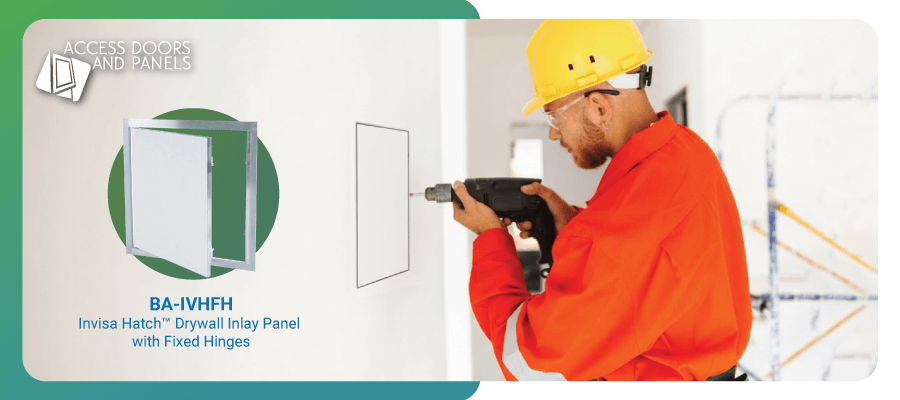
Featured Examples: The BA-IVH and BA-IVHFH Invisa Hatch Drywall Inlay Panels embody this innovation. The former has a detachable hatch while the latter has fixed hinges.
These panels feature a ½" and 5/8" gypsum-inlay frame that integrates seamlessly into non-rated walls and ceilings. Their lightweight aluminum build enables fast installation, while the hidden hinge supports clean finishes.
For maximum clearance, choose the fully detachable BA-IVH with a latch-free design. The BA-IVHFH is ideal when space constraints are not an issue.
Best Applications: Public-facing places in offices, healthcare facilities, and education spaces. Another is high-end hospitality interiors, where appearance matters as much as performance.
2. Insulated Panel Materials for Thermal and Acoustic Efficiency
Insulated access panel materials improve performance by maintaining thermal and acoustic continuity in walls and ceilings. Instead of creating weak points in the building envelope, these panels preserve thermal insulation where access is required.
In modern commercial construction, the rules around thermal leakage are only getting tighter. Even small uninsulated openings can contribute to energy loss, condensation, and HVAC inefficiency.
Insulated panel cores prevent these issues by maintaining the barrier across access points.
Acoustic control is another benefit. Insulated materials reduce sound transfer between spaces, meeting STC requirements for healthcare, hospitality, and mixed-use buildings. The material itself becomes part of the building's performance system, not just a cover.
Best applications: Exterior walls, mechanical rooms, corridors, and spaces where temperature and noise control matter.
3. Fire-Resistant Materials for Code Compliance
Fire-resistant materials improve commercial access panel performance by preserving the integrity of fire-rated assemblies during everyday use and emergency conditions. These materials are tested, rated, and engineered to match the performance of the surrounding wall or ceiling.
Without fire-rated materials, access openings become weak points in life-safety systems. Inspections fail, and liability increases. That's why modern access panels must be built with materials that maintain ratings even after repeated access.
Fire-rated materials also support inspection readiness. Panels open easily for maintenance but close securely, maintaining proper seals and latching. This balance between access and compliance is only possible through access panel material innovation.
Featured Example: BA-FRI Fire-Rated Insulated Access Door is designed for fire-rated walls and ceilings. It features a 16-gauge cold-rolled steel frame with a 20-gauge galvanized steel panel with 2" mineral wool insulation. It's rated for up to 2 hours and certified to UL standards.
The panel also features easy, hands-free operation in accordance with NFPA 80 standards. It's also LEED-compliant, with a 70% recycled-mineral-wool composition.
Best applications: Mechanical and electrical rooms in hospitals, schools, corridors, and government facilities. And any area where fire-rated assemblies are required.
4. Magnetic and Tool-Free Materials for Easy Access
Magnetic materials improve access panel performance by simplifying access without compromising material durability or appearance. These systems eliminate complex hardware and reduce the time required for inspections, servicing, and repairs.
Maintenance efficiency is a growing priority in commercial buildings. Facility teams need fast, reliable access without searching for tools or damaging finishes. Magnetic closures provide secure attachment while allowing quick removal and reinstallation.
These materials also improve installation reliability. Fewer moving parts mean fewer failures. The panel performs consistently over time, even with frequent use.
Featured Example: BA-EZMAG Adjustable Magnetic Closing Panel uses magnetic closure technology to provide clean finishes and tool-free access.
Its hinge-free and latch-free design makes it easy to install and operate for both novice and experienced professionals. The result is faster maintenance, lower labor costs, and fewer disruptions to occupied spaces.
Its adjustable design allows installers to adapt to different openings in 3/8" increments for a perfect fit.
Best applications: IT rooms, plumbing chases, service corridors, and mechanical access points that require frequent entry.
5. Durable, High-Strength Materials for Long-Term Performance
High-strength materials improve commercial access panel performance by resisting wear, warping, corrosion, and fatigue over time. These materials are ideal for repeated access in demanding environments where standard panels fail early.
Commercial buildings experience constant use. Panels get opened, closed, bumped, and cleaned. Weak materials deform, leading to misalignment and failure over time. High-strength metals and reinforced frames maintain their shape, appearance, and functionality over years of use.
This material durability directly affects lifecycle performance. Stronger construction materials mean fewer replacements, lower maintenance costs, and more predictable performance throughout the building's lifespan.
Featured Example: BA-IVHDF Drywall Inlay - Mud in Flange is built with sturdy, high-grade welded aluminum for durability. The aluminum resists corrosion and supports frequent access even in high-traffic environments. The drywall inlay and mud-in flange ensure a perfect fit that virtually "disappears" into the wall.
Best Applications Commercial offices and tenant spaces, hospitality, and high-end interiors.
Request a quote for insulated and durable access doors, including tool-free or magnetic options. Ensure fast, reliable maintenance and long-term performance on your project. Call +1-888-327-5471.
Related: What Are the Best Access Doors and Panels for Fire-Rated Walls?
FAQs About Access Panel Material Innovations in 2026
1. What are the best future construction materials for commercial access panels?
The best commercial access panels use materials engineered for durability, fire resistance, insulation, and maintenance efficiency. Options include:
- Drywall inlay access doors
- Insulated access panels
- Panels with magnetic closures
- Panels reinforced with high-strength metals
These access panel types ensure long-term performance, reduce lifecycle costs, and maintain building code compliance.
2. How do drywall inlay access panels improve building finishes?
Drywall inlay access panels integrate seamlessly into walls and ceilings, preventing cracks, chips, and unsightly gaps. They reduce rework and support aesthetic continuity in modern interiors. They make installation faster and more reliable for commercial contractors and architects.
3. When should I choose fire-rated access doors for a project?
Fire-rated access doors are essential whenever an access panel penetrates a rated wall or ceiling. Use fire-rated materials to maintain fire compliance, protect structural assemblies, and ensure your building passes inspections.
4. Why are tool-free magnetic access panels becoming popular in commercial buildings?
Magnetic and tool-free panels simplify maintenance by allowing quick, repeatable access without tools. They reduce labor time, prevent accidental damage to finishes, and are ideal for areas with frequent inspections, such as IT rooms, mechanical shafts, and service corridors.
Conclusion
Access panel material innovation is shaping the future of access door performance. In 2026 and beyond, access panels have become performance-driven components that protect finishes and support compliance and operational efficiency.
Drywall inlay, insulated, fire-rated, magnetic, and high-strength materials are now essential tools for meeting modern construction expectations. Models like BA-IVH, BA-IVHFH, BA-IVHDF, BA-EZMAG, and BA-FRI reflect this shift by aligning material choice with real-world building demands.
Looking for expert guidance on how to choose the right access solutions for your project? Contact our team for advice on fire-rated, high-strength, or drywall inlay access panels that meet your project's compliance, aesthetic, and performance goals.