 1-800-609-2917

 1-800-609-2917

How Do Flush Access Panels Benefit Modern Commercial Interior Efficiency?
Posted by Access Doors and Panels on 30th Mar 2026
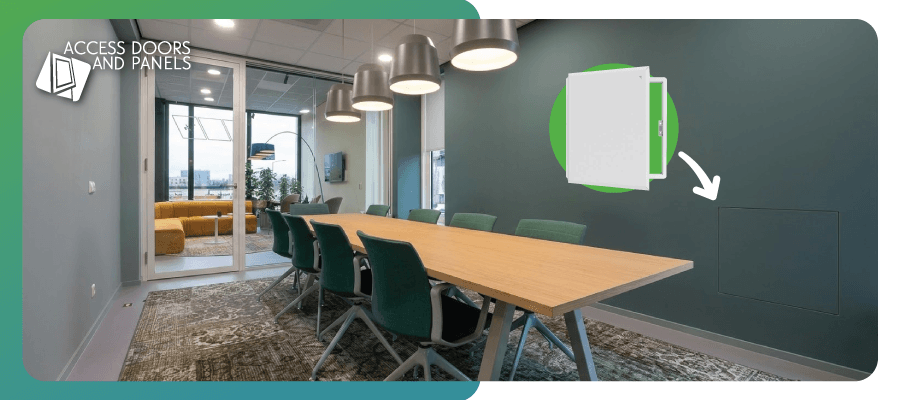
Flush access panels improve commercial interior efficiency by reducing finish repairs, patching, and reinstallation that often come with surface-mounted panels.
In modern commercial interiors, clean finishes and repeatable workflows are the standard for profitability. These panels provide a flush fit that protects the architectural intent without compromising function.
By planning access points for both utility and finish from the start, contractors avoid costly drywall and finish coordination errors. As a result, they minimize rework and protect project schedules.
This article explains how flush access panels, such as BA-UHF, can transform access points from a punch-list headache into a planned part of the interior construction workflow.
Why Do Access Panels Affect Efficiency in Modern Commercial Interiors?
An access panel becomes a labor efficiency problem when it's treated as an afterthought instead of a coordinated scope item.
In the typical interior construction workflow, the sequence is rigid. Framing leads to MEP rough-in, followed by drywall, finishing, and finally the punch list. When access panels are selected or placed late in this cycle, it triggers a domino effect of finish damage.
Cutting into a freshly painted wall to install a bulky, surface-mounted frame leads to extra patching and repainting. These are labor-intensive tasks that stall the commercial interior fit-outs.
Poorly managed access panel coordination is a primary driver of extra work at the end of a project. Because these panels touch multiple trades—electrical for the components behind them, drywall for the mounting, and paint for the finish—they represent a significant coordination risk.
If the panel doesn't sit flush or requires specialized trim, it often results in unhappy clients during walkthroughs and a longer punch list that eats into the contractor's margin.
Stop the rework cycle and move toward a one-and-done install. Browse our full selection of flush access doors to streamline your finishing process and protect your project margins.
Related: Enhance Aesthetic Appeal With Our Flush Access Doors
How Do Flush Access Panels Differ from Surface-Mounted Options in Workflow Impact?
Flush access doors are designed to disappear into the wall or ceiling plane, whereas surface-mounted options protrude past the finish. This protrusion isn't just an aesthetic issue; it's a workflow disruptor. Surface-mounted frames require the finisher to work around them, often leading to uneven paint build-up or the need for extra trim work to hide gaps.
In modern commercial interiors, a flush-mounted installation simplifies the drywall and finish coordination. Because the panel door sits perfectly level with the surrounding surface, the painter can treat the surface as a continuous plane.
This reduces the time spent on delicate "cutting-in" around hardware, maintaining the design intent without secondary adjustments.
What Installation and Finishing Efficiencies Do Flush Access Panels Provide?
Reduced Patching and Touch-ups
The most immediate win for labor efficiency is the reduction in drywall repair cycles.
Flush access panels are typically installed during the hanging or taping phase, allowing the drywall compound to be feathered directly over the flange. This integrates the panel into the wall, eliminating the need for sanding and repainting.
Faster Closeout and Fewer Punch List Issues
Commercial interior efficiency is often measured by how quickly a project can be handed over. By achieving inspection readiness the first time, GCs can avoid the back-and-forth of late-stage adjustments.
A clean, flush finish is far more likely to pass a final architectural walkthrough without comment.
Cleaner Sequencing with Fewer Trade Conflicts
When access panel coordination happens early, trades don't have to "make it work" in the last minute. Proper installation sequencing means the mechanical contractor knows exactly where their valves are, and the drywaller knows exactly where the frame sits.
This clarity prevents coordination issues. No dealing with a situation where a plumber realizes they can't reach a shut-off valve because the access door was placed three inches too low or behind a structural stud.
Better Lifecycle Access without Sacrificing Appearance
Efficiency doesn't end when the building is handed over. Modern commercial interiors require constant lifecycle maintenance access for smart building controls, dampers, and valves.
Flush panels provide this necessary entry point without turning a sleek hallway into a utility corridor. Facility managers benefit from hardware that is easy to open but remains invisible to the building's daily occupants.
Related: Achieve Seamless Integration With Aluminum Framed Access Doors With Drywall Inserts
When Should Flush Access Panels Be Specified to Maximize Efficiency?
- During Design and Pre-Construction: Specifying flush access panels during the design phase ensures that the framing budget accounts for the necessary bracing. It also ensures that the MEP layout aligns with the panel's swing radius.
- During BIM and Coordination Meetings: Placing access panels in the 3D model ensures that their locations and sizes align with the MEP devices they serve. When drywall and finish coordination happen in BIM, the physical installation becomes as simple as following the map.
- Before the Finishing Scope Begins: The "golden window" for installing flush access panels is after framing but before the final wall coverings are applied. This allows the tapers and finishers to incorporate the frame into their standard workflow.
- For Long-Term Building Maintenance: Specifying high-quality access doors ensures that, when a technician needs to reach a VAV box down the line, they can do so without damaging the surrounding ceiling. It's lifecycle maintenance access that respects the building's aesthetic for the long haul.
How Does BA-UHF Support Clean, Efficient Interior Construction?
The BA-UHF Aesthetic Access Panel with Hidden Flange is a sturdy, versatile solution that bridges the gap between durability and high-end aesthetics.
Built from 16-gauge cold-rolled steel, it provides the structural integrity needed for high-traffic areas while maintaining a profile that supports flush-mounted installation.
This model streamlines the interior construction workflow through several key design features:
- Concealed Hinge Design: The exclusive hidden hinge ensures that no hardware disrupts the wall or ceiling's visual plane. It facilitates inspection-readiness without additional trim work.
- Precision Finishing: Every unit comes with a high-quality white powder-coat primer. It's paint-ready, which reduces the time required for drywall and finish coordination.
- Flexible Orientation: With the hinge along the height, it enables predictable installation sequencing tailored to specific MEP clearance requirements.
- Secure and Accessible: The standard screwdriver-operated cam latch provides quick entry. Optional key-operated cylinder cam latches and hex head latches allow for customized security levels.
- Flexible Upgrades: The BA-UHF access panel also adapts to specialized environments with high-performance upgrades. For projects requiring moisture resistance or medical-grade hygiene, it is available in Stainless Steel 304 (brushed finish). Additionally, for theaters or laboratories where air-seal or acoustical performance is a priority, the optional neoprene gasketing ensures the panel performs as well as it looks.
Ready to deliver the "invisible access" look your designers demand? Request a quote for the BA-UHF access panel and ensure your next project is punch-list ready with a perfect flush-to-frame finish.
Frequently Asked Questions about Flush Access Panels
1. Why am I seeing cracking around my access panel frames?
Cracking is usually caused by a rigid frame shifting against the drywall. Using a flush access panel with a perforated "mud-in" flange allows the joint compound to bond directly through the frame, creating a unified surface that resists vibration.
2. What is the best way to coordinate MEP shut-offs with finishing?
Map all shut-off locations during the pre-drywall walkthrough and install frames while the drywall is being hung. This installation sequencing ensures the trades have perfect clearance before any paint is applied, eliminating late-stage "surgical" cuts.
3. What is the difference between a flush access panel and a surface-mounted door?
While both provide entry to MEP systems, a flush access panel is designed to sit level with the wall or ceiling, creating a minimalist appearance. Surface-mounted doors have a protruding frame that sits on top of the finished wall.
4. Can I use drywall inlay access doors in a fire-rated wall?
Only if the drywall inlay access door is fire-rated and labeled for the same wall assembly. A standard non-rated inlay door is not permitted in a rated wall, even if it sits flush and looks sealed. Inspectors will typically look for a visible UL/Intertek fire label and confirmation that the door is listed for the wall's required rating.
Conclusion
Efficiency in modern commercial interiors is won or lost in the details. Flush access panels are ideal for GCs and developers looking to streamline workflows and reduce labor costs. These components minimize the labor-heavy cycles of patching and repainting.
By prioritizing access panel coordination and using high-performance products like the BA-UHF, teams can improve inspection readiness and ensure cleaner finishes that hold up over time.
Don't let poor MEP coordination lead to late-stage finish damage. Contact our team today to secure high-performance access solutions that guarantee a clean, professional result. Call +1-888-327-5471.