 1-800-609-2917

 1-800-609-2917
What Access Panels Work Best for Electrical and EV Retrofit Projects?
Posted by Access Doors and Panels on 6th Aug 2026
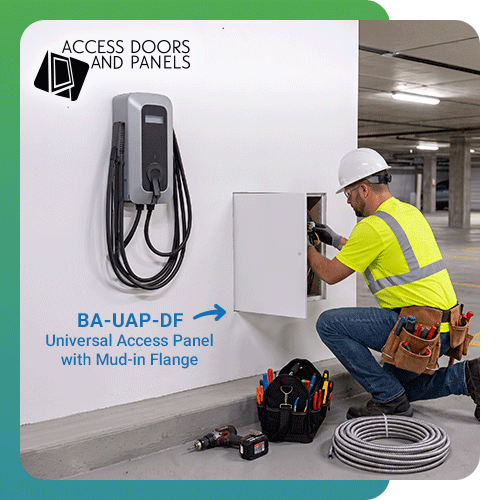
The best access panels for electrical and EV retrofits are those that provide secure, convenient access to concealed electrical infrastructure. Depending on the application, contractors may need fire-rated or non-rated panels, flush designs for finished interiors, or durable steel construction that can withstand frequent access and long-term use.
Selecting the right access panel helps simplify inspections, maintenance, and future electrical upgrades while reducing the need to cut into finished walls and ceilings, ultimately supporting a more efficient and cost-effective retrofit.
Why Do Electrical and EV Retrofits Require Better Access Solutions?
Electrical and EV retrofits require better access solutions because upgrading existing buildings often involves new installations. Think new wiring, conduit, electrical panels, and charging equipment behind finished walls and ceilings.
Properly placed access panels allow contractors and facility managers to inspect, maintain, and upgrade these systems without damaging surrounding finishes.
This need is becoming increasingly common as the demand for EV charging infrastructure continues to grow across the country. According to the U.S. Joint Office of Energy and Transportation, the U.S. had nearly 192,000 public Level 2 and DC fast charging ports by Q3 2024, with the number continuing to climb.
To add, the IEA's Global EV Outlook 2024 projects that the number of public charging points will exceed 25 million by 2035 in the Announced Pledges Scenario, a sixfold increase from 2023 levels.
For existing commercial and institutional buildings, meeting that demand requires significant electrical upgrades. That also creates a greater need for well-planned access solutions to support installation, inspection, and future maintenance.
Explore access solutions that help improve accessibility, streamline maintenance, and support long-term performance in retrofit applications. Have challenging project requirements left you searching for the right access panel? Our team can also help you with a custom solution that meets your installation and clearance needs.
Related: How Do You Choose Fire-Rated Access Panels That Pass U.S. Building Codes the First Time?
How Should Contractors and Facility Managers Select Access Panels for Retrofit Applications?
Selecting the right electrical and EV retrofit access panels depends on several project-specific factors that must be evaluated early in the planning process, not after the walls are closed. These decisions affect inspection readiness, long-term maintenance, code compliance, and the visual quality of finished spaces.
Here are some of them:
Existing Utility Layout and Space Constraints
Retrofit projects rarely begin with a blank slate. Existing electrical conduits, plumbing lines, HVAC ductwork, and structural framing can all influence where an access panel can be installed.
Evaluating these conditions early helps contractors select a panel size and location that provides adequate access while minimizing field modifications and installation delays.
Future Maintenance and System Upgrades
Access panels should support more than the immediate retrofit. Contractors and facility managers should consider whether concealed systems may require future inspections, equipment replacements, wiring upgrades, or technology additions.
Planning for long-term accessibility can reduce the need for additional wall or ceiling modifications as building systems evolve.
Coordination with Other Building Systems
Retrofit work often requires multiple trades to work within the same wall or ceiling cavity. Selecting and positioning wall and ceiling access panels should account for nearby mechanical, electrical, plumbing, and communication systems. This ensures each remains accessible without creating conflicts during installation or future maintenance.
Fire-Rated vs. Non-Rated Applications
Contractors should first determine whether the access opening is located in a fire-resistance-rated wall or ceiling assembly. Where the surrounding assembly requires a fire rating, the access panel must maintain that rating.
For non-rated drywall partitions and ceilings, a non-fire-rated panel such as the BA-UAP-DF may provide the clean appearance and convenient access needed for routine electrical maintenance and future upgrades.
Building Occupancy and Operational Needs
The building's day-to-day operations should influence where and how access panels are installed. In occupied offices, schools, healthcare facilities, retail spaces, or multifamily buildings, strategically placed access panels can help maintenance teams perform routine work with minimal disruption to occupants and business activities.
Project Budget and Lifecycle Value
Project budget decisions should extend beyond upfront costs to include the long-term value of electrical system maintenance access.
An access panel that allows technicians to efficiently inspect, service, and upgrade electrical components can help reduce labor costs, minimize disruptions, and support more cost-effective building operations throughout the facility's lifecycle.
Related: What to Consider in Upgrading Your Electrical Panels
Why Choose the BA-UAP-DF for Electrical and EV Retrofit Applications?
Based on the selection criteria discussed above, one product worth considering for electrical and EV retrofit applications is the BA-UAP-DF.
The BA-UAP-DF Flush Universal Access Door with Exposed Flange is a universal access panel designed for drywall applications where clean aesthetics and reliable functionality are both priorities. It has a flush, paintable face that integrates seamlessly with finished wall and ceiling surfaces, which is exactly what facility managers and architects need.
Key Features and Benefits:
- Efficient Installation: Features a 1-inch exposed flange for quicker and easier installation.
- Durable Construction: Built from 16-gauge cold-rolled steel for lasting strength and reliability.
- Moisture and Corrosion Resistance: High-quality white powder coat helps withstand challenging environments and everyday wear.
- Precision Mud-In Flanges: Creates a seamless transition between the access door and surrounding drywall.
- Sustainable Construction: Manufactured with responsibly sourced materials that can contribute to LEED v4 credits.
Ready to incorporate the BA-UAP-DF into your next commercial project? Request a quote today to find the right access panel configuration or size for your EV installation requirements.
How Proper Access Panel Installation Supports Successful Retrofits?
Proper access panel installation supports successful retrofits by providing safe, reliable access to concealed electrical infrastructure. Access panels for EV charging installations should be positioned where technicians can easily reach electrical components, simplifying inspections, maintenance, and future system expansions.
Careful placement also improves serviceability, minimizes disruptions to building occupants, and helps protect the building's long-term functionality.
Even if you've selected the right product, such as the BA-UAP-DF Flush Universal Access Door with Exposed Flange, proper installation is equally important. Following the manufacturer's installation guidelines, choosing the correct panel size, and placing the access panel where technicians can easily reach concealed electrical components will help maximize its performance and support efficient maintenance.
For contractors, architects, and facility professionals who regularly install and specify access doors across multiple projects, joining the Pro Club offers additional support and value. Members receive priority quote turnaround, expedited order processing, preferred shipping rates, and direct access to a dedicated Account Executive to keep projects on schedule.
Frequently Asked Questions About Access Panels for Electrical and EV Retrofit Projects
1. What type of access panel is best for EV charging station installations?
The best choice depends on the installation environment and project requirements. Fire-rated, drywall, or insulated access panels are among the most common retrofit construction access solutions, offering secure access to electrical components while helping meet building codes and simplify future maintenance.
2. Can access panels help reduce retrofit project costs?
Yes. Access panels minimize the need for demolition and reconstruction when servicing concealed electrical systems. This can lower labor expenses and reduce downtime during future maintenance or upgrades.
3. Are fire-rated access panels necessary for electrical retrofit projects?
In many commercial and multifamily buildings, fire-rated access panels may be required when installed in fire-resistance-rated walls or ceilings. Always verify local code requirements and project specifications before selecting a panel.
4. How do access panels support future electrical upgrades?
Electrical systems often require modifications as technology evolves. Access panels create designated access points that make it easier to add circuits, upgrade wiring, or expand EV charging capabilities without major renovations.
Ready to Get the Right Access Panels for Your Retrofit Project?
Access panels are essential to keep electrical and EV retrofit projects functional long after installation is complete. Incorporating the appropriate access solutions into the project plan helps maintain convenient access to critical building systems while supporting future modifications and routine servicing as operational needs evolve.
Access Doors and Panels offers access solutions for a variety of retrofit applications across commercial, industrial, and institutional facilities.
Need help with access panel installation? Our team can provide guidance on selecting the appropriate panel, determining the right installation location, and addressing project-specific requirements to help ensure long-term accessibility.
Contact our team to discuss your access panel requirements and find the right solution for your retrofit application. You can also call us at +1-888-327-5471 to speak with a specialist directly.